




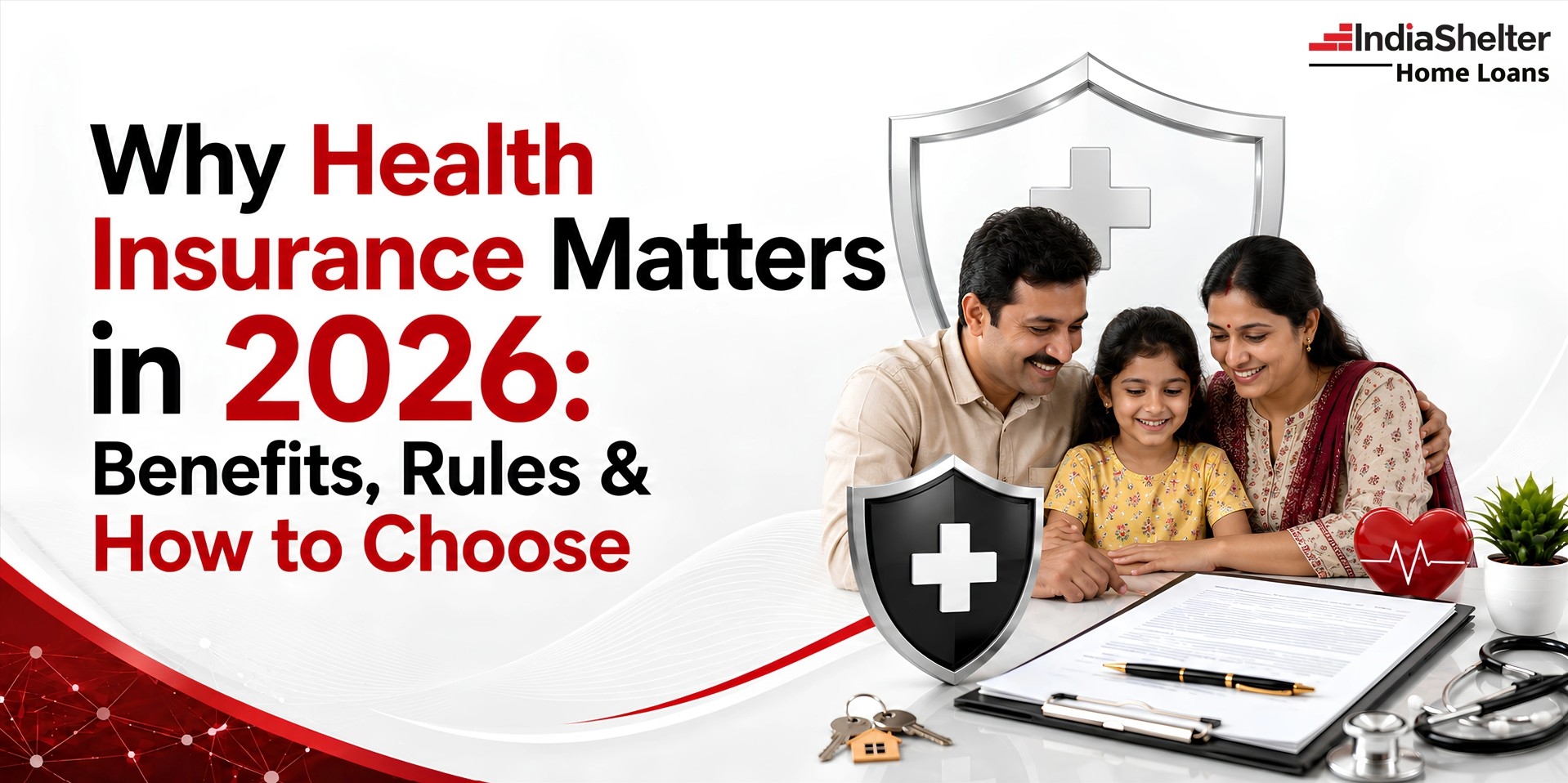
Health Insurance in 2026: Importance, Benefits & New Rules
Published on :2026-09-11
Quick Answer
Health Insurance is relevant in 2026 due to the fact that medical inflation in India is touching 14% a year, which means that a single hospitalization can eat up all the savings you have saved over many years. An insurance policy shifts all these risks to the insurance company for an annual premium, provides cashless access to hospitals, and, in the old taxation system, provides deductions up to ₹25,000–₹50,000 under Section 80D. Additionally, the new IRDAI regulations have made policies more consumer friendly by removing the upper age limit, reducing moratorium to 5 years, and cashless approvals in one hour.
What is health insurance?
This is an agreement where the insurer promises to cover your medical expenses, which include hospitalization, surgery and even pre- and post-hospitalization expenses, in return for you paying an annual premium. This is based on the concept of risk pooling, whereby the premiums paid by the various policyholders fund the claims of only a few people every year.
Why is health insurance important in 2026?
Direct answer: There are five such reasons — escalating medical costs, protecting savings, tax breaks, going cashless, and benefits even outside the hospital stay.
1. The medical costs are going up more quickly than anything else
According to reports of the Insurance Brokers Association of India, India is experiencing around 14% per year inflation in healthcare costs — some of the highest in Asia. Even now, the cost of a basic private hospital surgery stands between ₹50,000 and ₹2 lakhs and keeps doubling every five-six years on account of medical inflation.
2. It protects your savings and other assets
In the absence of insurance, any medical crisis makes people spend their emergency funds, make investments into cash, borrow heavily at interest rates, or in extreme cases, sell off assets. It saves your future plans (buying a home, educating kids, retiring) from being affected by the hospital costs.
3. Tax benefits under Section 80D – with one reservation
As per the Income Tax Act under Section 80D, one is eligible for a deduction of up to ₹25,000 annually for the premium paid on self, spouse, and dependent children (₹50,000 for senior citizens) in addition to another deduction for premium payment for one's parents. Note: This is possible only in the case of the old tax regime and not for taxpayers choosing the new (default) tax regime. Take note of this while planning your taxes.
4. Cashless treatment – in virtually any hospital
With the help of the "Cashless Everywhere" program of the health insurance industry (introduced January 2024), policyholders are allowed to avail of cashless treatment even in a hospital that is not part of the network of the insurance provider with a prior notice and policy terms and conditions. According to IRDAI's Master Circular 2024, the insurer needs to settle a cashless authorisation request in one hour and discharge clearance in three hours.
5. Coverage is not limited to the hospital bed
Typical insurance policies usually include coverage for pre-hospitalization expenses (consultations and diagnostic tests) and post-hospitalization expenses (medicines and follow-up visits) for specific periods before
What are the types of health insurance in India?
Direct answer: Four common structures, matched to different life stages:
Type |
Who it suits |
Key feature |
|
Individual plan |
Young professionals, single adults |
Premium based on one person's age and health |
|
Family floater |
Families with children |
One shared sum insured covers all members; cost-effective |
|
Senior citizen plan |
Individuals 60+ |
Covers age-related ailments; higher premium, tailored benefits |
|
Critical illness plan |
Anyone with family history of major disease |
Lump-sum payout on diagnosis of listed illnesses (cancer, heart attack, stroke) — paid regardless of actual bills |
What changed in health insurance rules recently? (IRDAI 2024 updates)
Direct answer: The IRDAI's reforms in 2024 have brought about the most consumer-centric overhaul in many years. If you've not followed health insurance developments since 2024, here are some aspects that will change the scenario:
- No age limit for purchasing a policy. From April 2024, the earlier rule of setting a ceiling on new policies at 65 is no more, with insurance companies having to sell their products across ages, thus making it possible for people to take out new policies irrespective of age (underwriting considerations).
- Reduced moratorium period from 8 years to 5. Within five continuous years after purchase of the policy, the insurer cannot decline claims due to failure to disclose existing illnesses except in cases of fraud.
- Pre-existing disease wait period restricted to 36 months, reduced from a maximum of four years earlier.
- Quicker processing of claims. Claim approvals within 1 hour for cashless procedures and discharge within 3 hours; the delay charges have to be paid by the insurer.
- Prohibition of excessive premiums for senior citizens. Hike in premium rates for policies owned by those 60 and above is generally capped at around 10% per annum without consultation with the IRDAI.
How do you choose the right health insurance policy?
Direct answer: Inspect four elements before looking at the premium – sum insured, hospital network, waiting periods, and maximum room-rent cap.
Sum insured – Choose insurance that covers your family and city adequately. The general rule followed by most planners is about 5 to 10 times your annual income and should not be less than the price of one private hospitalization in your city.
Hospital network – Even if Cashless Everywhere scheme has been launched, the claims process is easier with a good hospital network coverage in your city and wherever you visit frequently.
Waiting periods – Know the time remaining for pre-existing diseases (maximum of 36 months as per recent rule), maternity and specific treatments.
Maximum room-rent cap – Capped room rent may reduce the entire claims payout proportional to its cap value. Choose an insurance policy without any maximum room-rent cap or with high cap value.
Compare the claim settlement ratio (annually published by IRDAI) of each insurer before choosing any insurance plan – high claim settlement ratio shows regular claims settlement.
How does health insurance fit into your financial plan?
Health insurance is the defensive layer that protects every other financial goal. If you're repaying a home loan, an uninsured medical emergency competes directly with your EMI — and missed EMIs damage your credit score and put your home at risk. Pairing adequate health cover with your loan, investments, and SIPs ensures a hospital bill never forces you to break long-term assets or default on commitments.
Common myths about health insurance — debunked
"I'm young and healthy, I don't need it." Neither do diseases and accidents ask for your age. Getting insurance while still young not only saves money but completes your waiting period.
"My employer's insurance suffices." Employer-based insurance coverage stops the moment you stop working, and most times is limited to ₹3-5 lakhs, and cannot be customized. On the other hand, an individual policy goes with you.
"Insurance is too expensive." The average cost of an individual health insurance policy for one year is between ₹10,000 to 15,000, which is peanuts compared to the cost of hospitalization in 2026.
"Insurers do not honor claims." Most well-established insurance companies honor their payments, and the IRDAI has now put into force timelines within which a claim must be settled. Ensure to check your insurer's claim settlement ratio, declare your health conditions honestly, and you are good for the next 5 years.
Key Takeaways
Question |
Short answer |
|
Why is health insurance essential in 2026? |
Medical inflation ~14%; one emergency can erase years of savings |
|
Minimum sensible cover |
~5–10× annual income, or at least one major treatment's cost |
|
Tax benefit |
₹25,000 (₹50,000 for seniors) under Section 80D — old tax regime only |
|
Can seniors above 65 buy a policy? |
Yes — IRDAI removed the entry-age cap in 2024 |
|
Cashless claim speed |
Authorisation within 1 hour; discharge within 3 hours |
|
Pre-existing disease waiting period |
Capped at 36 months |
Frequently Asked Questions
Why should one have health insurance in India?
Due to the reasons that increasing medical expenses are going up by about 14% each year while incomes increase way too slow, a simple hospitalization which could cost ₹50,000-₹2 lakh or more would wipe out your years of savings which could be managed through an insurance company against an affordable premium.
How much health insurance cover should I have?
Generally, the recommendation is having a coverage of 5-10 times the annual income and, in any case, sufficient to meet the cost of one serious treatment in your city's private hospital. Families in metro cities need more coverage compared to families in smaller cities.
Is Section 80D available under the new tax regime?
No. You can claim deductions up to ₹25,000 (₹50,000 for senior citizens) under Section 80D of Income Tax Act for premium paid towards health insurance but if you have opted for the old regime. Taxpayers under the new regime cannot avail this deduction.
Are there any health insurance plans for seniors over the age of 65 years?
Yes, starting from April 2024, the IRDAI has scrapped the upper age limit for purchasing health insurance, mandating health insurers to provide insurance across all age bands. The premium rates will be higher for the elderly and require underwriting but age will not be the deciding factor anymore.
What is Cashless Everywhere in Health Insurance?
A concept started by the industry in January 2024, where policyholders can avail cashless facility at non-networked hospitals provided that the insurer is intimated in advance (48 hours prior to hospitalization in case of elective cases and within 48 hours of hospitalization in emergencies).
Is employer health insurance sufficient?
In most cases, it is not sufficient. The cover ceases once one leaves the job, is capped to relatively low limits and does not provide any continuity benefits. An individual plan along with an employer’s plan will help continue to accumulate waiting period credits in the individual's name.
Sources & References
- IRDAI Master Circular on Health Insurance (2024) — key policyholder changes: removal of the upper entry-age limit (effective April 2024), moratorium reduced from 8 to 5 years, and 36-month cap on pre-existing disease waiting periods. HDFC Ergo — IRDAI guideline updates | Policybazaar — new IRDAI health insurance guidelines
- Claim timelines and senior premium caps: cashless authorisation within 1 hour, discharge approval within 3 hours, ~10% annual cap on premium hikes for policyholders aged 60+, and the Cashless Everywhere initiative (General Insurance Council, January 2024). Ditto — IRDAI health insurance rules
- Section 80D, Income Tax Act: deduction limits of ₹25,000 (₹50,000 for senior citizens), preventive health check-up sub-limit of ₹5,000, and availability under the old tax regime only. ClearTax — Section 80D guide
- Medical inflation (~14%): industry estimate attributed to the Insurance Brokers Association of India. Bajaj Life Insurance — Section 80D overview citing IBAI/Indian Express
- India Shelter — Home Loan: context on protecting loan repayment capacity through adequate insurance.
This article is for general awareness and is not insurance, tax, or investment advice. Policy terms, IRDAI regulations, and tax provisions change; verify current rules with your insurer, the IRDAI website, and a tax professional before making decisions. India Shelter Finance Corporation is a housing finance company and does not issue health insurance policies.
Related Blogs

2026-05-26
Affordable home loan options in India for low-income buyers
Looking for affordable home loans in India? Explore PMAY benefits, low EMI options & easy loans for low-income home buyers

2025-12-11
Common Mistakes to Avoid When Applying for a Home Loan in 2026
Planning to take a home loan in 2026? Don’t apply before reading this- learn about the top mistakes many borrowers make and how you can avoid them for smoother approval and lower long-term costs.

2026-09-01
How Green Homes Can Cut Your Electricity Bills by Up to 40%
How do green homes cut electricity bills by up to 40%? Rooftop solar, BEE 5-star appliances, LEDs, and solar water heaters — with savings data & FAQs.
Disclaimer: *By contacting IndiaShelter on Toll Free/WhatsApp/Website or any other mode, you authorize our representatives to reach out to you through personal communication via SMS, WhatsApp and phone calls regarding our services. This consent will supersede any registration for any Do Not Call (DNC) / National Do Not Call (NDNC).
© India Shelter Finance Corporation 2026 | All rights reserved
Design with byCyberworx