





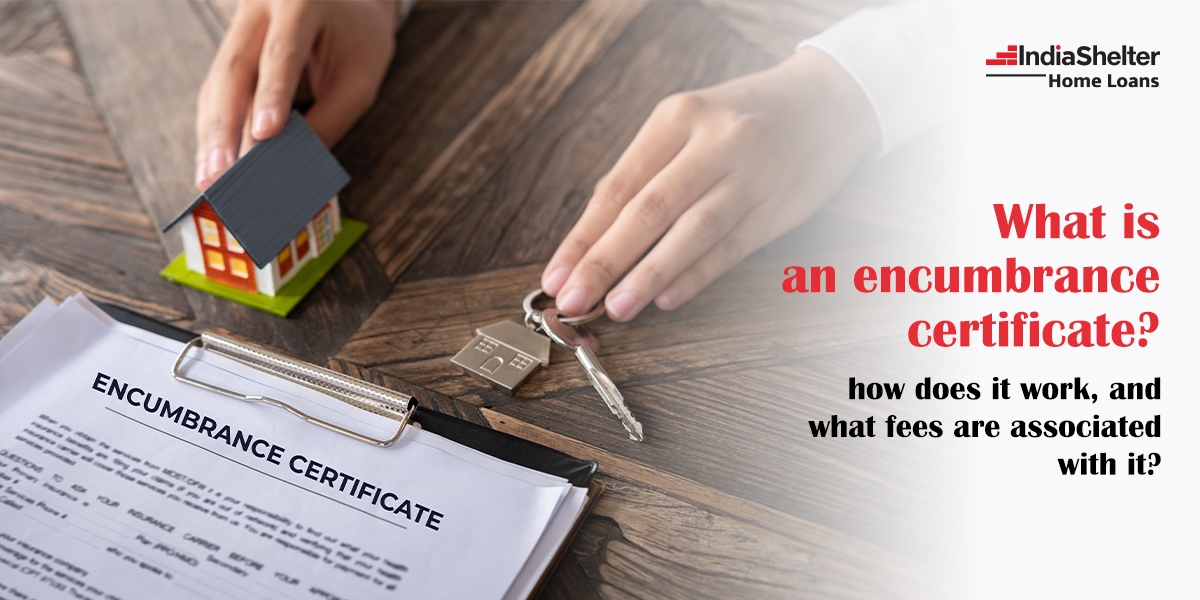
Encumbrance Certificate (EC): Meaning, Fees, Online Application
Published on :2026-11-12
Author: Hema Bora
Summary
Purchasing any property requires looking beyond the location and cost aspect of the property. It also entails verifying the legal and financial history of the property. The Encumbrance Certificate (EC) is one of the documents that will enable you to do so.
Encumbrance Certificate is an authentic document which records the history of transactions and encumbrances associated with the property within a particular time frame. An EC will help you find out if there are any registered transactions related to the property, such as mortgage, sale, gifting, or some other legally registered transaction.
An EC holds significance in the buying/selling process of property and also when the lenders ask for the same while sanctioning the home-loan or loan against property. However, one must keep in mind that an EC does not provide any kind of assurance regarding the title of the property.
In this guide, we provide you with information on what is an Encumbrance Certificate, importance of an EC, online application for Encumbrance Certificate, state wise portals, required documents, and FAQs.
What is an Encumbrance Certificate?
An encumbrance certificate is a legal document that officially confirms the property's ownership status and title. It also lets you know if the said property has any dues pending, mortgaged or is free from legal obligations. As a home buyer, this document holds great value for you as it ensures complete transparency in the purchase transaction and that you are aware of the property's records, allowing you to take an informed decision.
Importance of encumbrance certificate
- When buying a new property, you must be very careful about the legal aspects. Sometimes, as you purchase the property, there is a risk that you may inherit the liabilities associated with it. That is where EC plays an important role. It helps you confirm that the said property does not have any outstanding dues.
- If you want to apply for a loan against property, you must submit these documents, as it is a mandatory requirement. They showcase to the lender that you are the rightful owner of the property and can easily get the loan.
- You will need the encumbrance certificate to withdraw funds from your PF (Provident Fund) account.
How do I get the EC online?
Since the encumbrance certificate is such an important document, you must have it handy. Getting the certificate is quite easy. Follow these tips to get an EC certificate online.
- Step 1 – Access the official government portal
Every state has its own property registration portal/website, so visit your state's official government portal.
- Step 2 – Register or Log In
If you are using the property registration portal for the first time, you may have to create an account by filling in the necessary details. If you already have an account, use the credential to log into the portal.
- Step 3 – Fill out Form 22
Once you log into the portal, navigate through to the Form 22 section, and fill out the application. Here you would require to provide details about the property seller, buyer, etc.
- Step 4 – Submit documents
Along with form 22, you must submit necessary documents like identity proof, property-documents, etc., for verification and authentication.
- Step 5 – Pay the fees
After you submit the necessary documents, proceed to pay the fees for EC and complete the application process. The charges for getting the EC may vary from one state to another, but it generally ranges from Rs. 200 to Rs. 500.
- Step 6 – Verification and issuing of EC
After receiving your application for the EC, the sub registrar's office will review your application and the documents submitted. If there are no encumbrances on the property, they will issue Form 16. If there are any encumbrances, they will issue Form 15.
- Step 7 – Download the EC
Once the sub-registrar has issued the EC, the department will mail you a notification. You can then log into the portal, download the certificate, and keep a copy for your records.
Important documents required for getting an encumbrance certificate
As mentioned earlier, when you apply for the encumbrance certificate online, you must submit certain documents along with the application form. Although the documents required may vary from one state to another, generally, you must submit the following documents:
- Property registration proof
- Possession deed and title deed
- Copy of the reference letter
- Address proof
- Partition deed, sale deed, gift deed (as applicable)
- Duly filled application form 22
Encumbrance Certificate (EC) State-wise Portal
|
State |
Official portal |
How to apply |
|
Andhra Pradesh |
Government registration portal |
Online EC search/application |
|
Assam |
Government land/registration portal |
Online, where available |
|
Bihar |
Government registration portal |
Online service |
|
Chhattisgarh |
Government registration portal |
Online service |
|
Gujarat |
GARVI / registration portal |
Online EC/property search |
|
Haryana |
Jamabandi / registration services |
Online, where applicable |
|
Himachal Pradesh |
Registration department portal |
Online service |
|
Karnataka |
Kaveri |
Online EC application |
|
Kerala |
Registration Department |
Online EC application |
|
Madhya Pradesh |
Registration & Stamps portal |
Online service |
|
Maharashtra |
IGR Maharashtra |
Online EC/search services |
|
Odisha |
IGR Odisha |
Online EC application |
|
Punjab |
Registration & Revenue services |
Online service |
|
Rajasthan |
Registration & Stamps Department |
Online property/registration services |
|
Tamil Nadu |
TNREGINET |
Online EC application |
|
Telangana |
Registration & Stamps Department |
Online EC application |
|
Uttar Pradesh |
IGRSUP |
Online property/registration services |
|
Uttarakhand |
Registration Department |
Online service |
|
West Bengal |
Registration & Stamp Revenue |
Online EC/search services |
Tracking the EC certificate application status
Once you submit your application for an encumbrance certificate online at the government portal, you will receive a reference number. Make sure that you note this number and keep it safe. You can use this number to track the status of your application by logging into the portal. It usually takes about 15-20 days to process the application and issue the certificate and the time may vary from one state to another.
Benefits of having the EC
The encumbrance certificate offers many benefits to both property buyers and sellers.
- Buyer
The encumbrance certificates can help the home buyers evaluate whether the property they want to buy has any dues pending or is at the centre of any legal issue. Thus, it ensures that the buyers don't risk investing in any property that has pending legal cases and risk losing their hard-earned money and get themselves involved in the case.
Also, the buyer would need these documents to get their home loan sanctioned and complete the purchase transaction.
- Seller
The encumbrance certificate that shows no dues and clear transactions can help the seller of the property to complete the sale transaction quickly. Also, it is an important document that the seller must provide to the potential buyer to win their trust and showcase to them that the property is clear of all legal issues.
Frequently Asked Questions About Encumbrance Certificates
1. Define Encumbrance Certificate.
Encumbrance Certificate is a formal document that contains information related to registered transactions or encumbrances of the property for a certain period of time. This document is usually obtained during the process of selling or purchasing a property or taking loans on property basis.
2. Is EC mandatory while buying property?
EC is one of the very important property documentation papers required for verification before purchase. However, depending upon the type of transaction and the organization in question, the EC requirement may vary.
3. How to get an EC online?
Yes. Many states offer an online facility of getting an EC or property registration search through their government websites.
4. What is the cost of an EC?
There is no standard fee charged throughout India. ECs come with different fees based on the state and could even depend on the time period searched, nature of the service and portal/service charges that apply. It is important to confirm the latest fee from the respective state government portal.
5. How long will it take to obtain an EC?
This could differ depending on the state, type of application and digitisation status of the records. Online applications may take less time compared to other applications especially in situations where the records have not been digitised.
6. What is the difference between Form 15 and Form 16?
Form 15 usually contains details of registered dealings or encumbrances that are discovered during the period of searching whereas Form 16 is obtained when no such encumbrance is discovered.
7. How long will the history of the property be covered by the EC?
The period covered by the EC will depend on the duration of the search that you have requested and the records maintained by the concerned registration authority. In case you wish to buy a property, then your lender or lawyer might advise you on the duration that should be covered in your EC.
8. Can I acquire an EC without the consent of the property owner?
Whether you can acquire an EC or conduct an EC search will be determined by the guidelines followed by the state registration authority concerned. Most portals allow property searches without necessitating the owner to make the request himself/herself.
9. Does an EC equal a title clearance certificate?
EC mostly shows you what is recorded at the registration office in terms of the registered transactions and encumbrances.
10. Why do banks need an EC when giving home loans?
Most banks request an EC so that they can conduct their due-diligence concerning the property. Lenders may request an EC as part of their property due-diligence process. It helps them review registered transactions and encumbrances associated with the property before evaluating the property as security for the loan.
Conclusion
An Encumbrance Certificate is an important document that can help you understand the registered transaction history and encumbrances associated with a property. When you are planning to purchase a house, sell the property, or even take a home loan, getting an EC while conducting property due diligence can prove very useful. As different states have a varied procedure and fee structure to get an EC, you must always consult the respective government website. If you want to take a home loan, then all the property and financial documentation needs to be properly arranged.
Related Blogs

2026-05-26
Affordable home loan options in India for low-income buyers
Looking for affordable home loans in India? Explore PMAY benefits, low EMI options & easy loans for low-income home buyers

2025-12-11
Common Mistakes to Avoid When Applying for a Home Loan in 2026
Planning to take a home loan in 2026? Don’t apply before reading this- learn about the top mistakes many borrowers make and how you can avoid them for smoother approval and lower long-term costs.

2026-09-01
How Green Homes Can Cut Your Electricity Bills by Up to 40%
How do green homes cut electricity bills by up to 40%? Rooftop solar, BEE 5-star appliances, LEDs, and solar water heaters — with savings data & FAQs.
Disclaimer: *By contacting IndiaShelter on Toll Free/WhatsApp/Website or any other mode, you authorize our representatives to reach out to you through personal communication via SMS, WhatsApp and phone calls regarding our services. This consent will supersede any registration for any Do Not Call (DNC) / National Do Not Call (NDNC).
© India Shelter Finance Corporation 2026 | All rights reserved
Design with byCyberworx